

S.H.Figuarts action figures by Bandai Tamashii Nations
Discover our selection of S.H.Figuarts figures by Bandai Tamashii Nations, an articulated figure line launched in 2008 that has become a major reference among collectors. Compact, detailed and designed for posing, S.H.Figuarts now covers many major licences such as Dragon Ball, One Piece, Naruto, My Hero Academia, Marvel and many more.

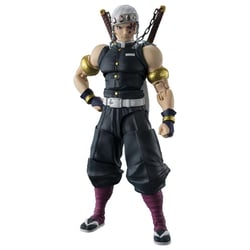
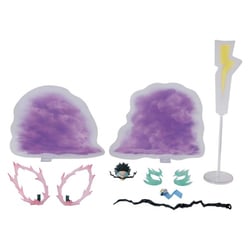
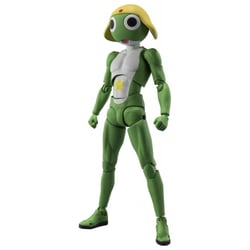
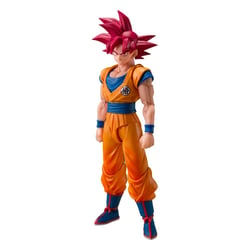
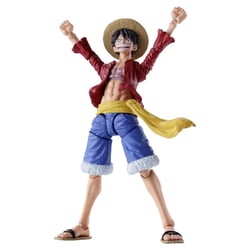
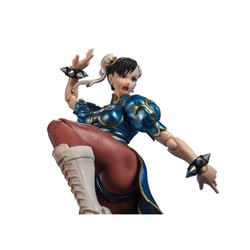
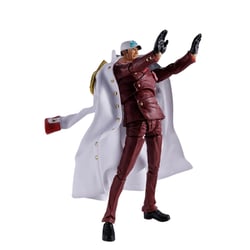
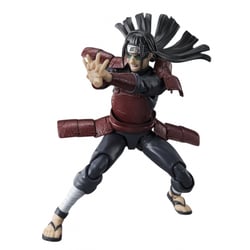
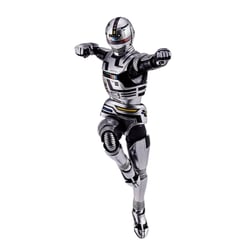
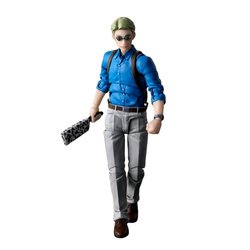
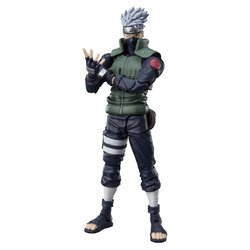
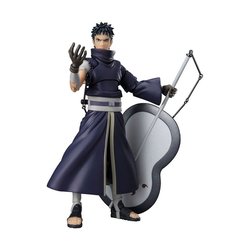
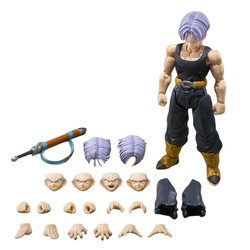
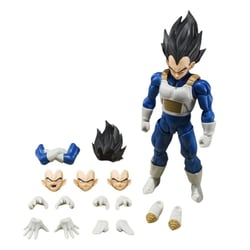
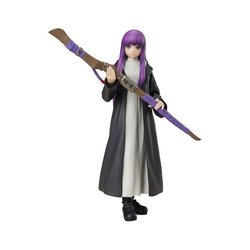
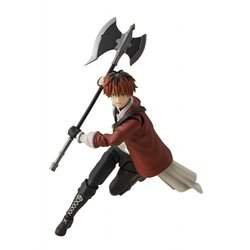
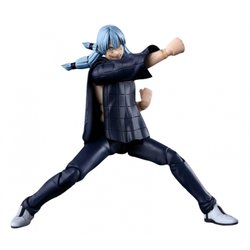
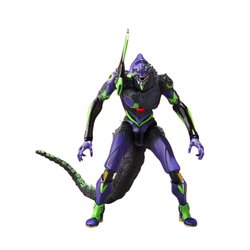
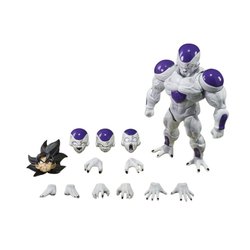
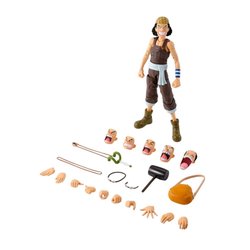
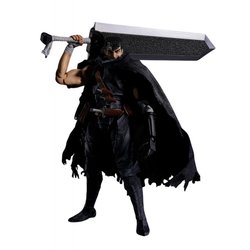
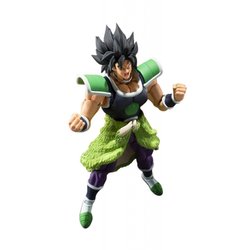
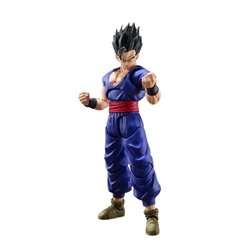
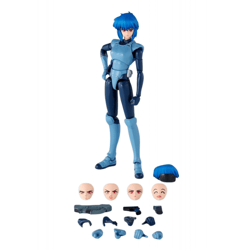
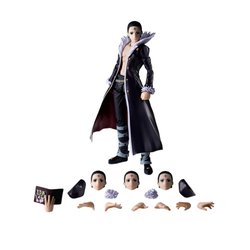
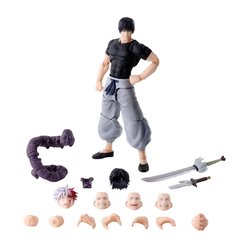
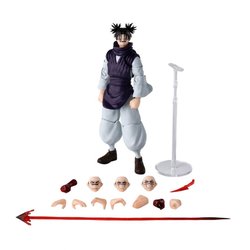
S.H.Figuarts: the history of a range launched by Bandai in 2008
The S.H.Figuarts range by Bandai Tamashii Nations first appeared in 2008 with characters from Kamen Rider. Tamashii Nations considers the Kamen Rider 1 figure from Kamen Rider THE NEXT to be the starting point of the collection, released in February 2008 alongside Kamen Rider V3. The range is a direct successor to the earlier articulated Souchaku Henshin figures, whose philosophy and technical solutions were still partly reflected in the first S.H.Figuarts models.
The name S.H.Figuarts is now officially associated with the concepts of “Simple Style” and “Heroic Action”. Tamashii Nations defines the range as an attempt to express each character through an articulated humanoid figure combining sculpting, mobility and accessories in a relatively compact format.
Originally closely associated with Japanese heroes such as Kamen Rider, Super Sentai and Metal Heroes, the collection gradually expanded into manga, anime, video games and later Western productions. Today, it is one of Bandai Tamashii Nations' main articulated figure ranges.
How are S.H.Figuarts figures designed?
The S.H.Figuarts philosophy aims to find a balance between sculpting accuracy and mobility. Highly visible joints or excessive cuts can detract from the character's appearance, while a completely uninterrupted sculpt would restrict posing possibilities.
Bandai therefore adapts the construction to each character. There is no single S.H.Figuarts body structure that has been used identically since 2008. Proportions and the articulation of the shoulders, torso, hips, knees and ankles regularly evolve and may differ from one licence to another.
Recent models therefore feature considerably more sophisticated mechanisms than the earliest generations. For Dragon Ball, for example, Bandai has been using its Dynamic-Movable Shoulder System since 2025-2026, designed to increase shoulder movement while maintaining a natural silhouette. Goku and Vegeta are among the characters currently equipped with this new mechanism.
The design must also take into account the specific features of each character: loose clothing, armour, long hair, coats, wings or muscular builds may require dedicated articulation solutions.
What materials are used for S.H.Figuarts?
The vast majority of contemporary S.H.Figuarts primarily combine PVC and ABS. This combination allows materials with different properties to be used for the outer sculpt, rigid components and parts involved in the articulation.
Some releases have also used POM or, more rarely, die-cast metal components. These combinations of materials were more common in the earliest generations. Tamashii Nations also occasionally uses transparent parts, metallic finishes or special surface treatments.
Fabric is now playing a greater role on certain figures. Characters such as Tomura Shigaraki, Casca and Guts, for example, use fabric capes or clothing, sometimes fitted with internal wire so they can be positioned as desired.
There is therefore no single material composition shared by all S.H.Figuarts: Bandai selects materials according to the character's costume, the required mobility and the accessories included.
Is S.H.Figuarts really a 1/12 scale range?
Not exactly.
S.H.Figuarts are often associated with 1/12 scale figures because an average adult character generally measures around 14 to 16 cm. Tamashii Nations historically described the concept as an action figure measuring approximately 14 cm or 5.5 inches.
It is therefore more accurate to consider S.H.Figuarts as a range whose format is approximately compatible with the 1/12 scale universe, rather than a collection that systematically follows a mathematically precise 1/12 scale.
Faces, hands, weapons and effects: S.H.Figuarts accessories
Interchangeable parts are one of the defining features of the range.
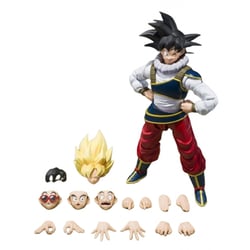
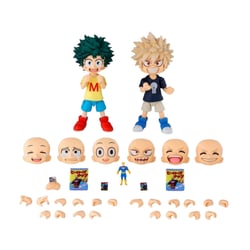
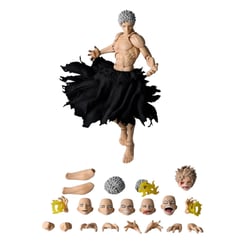
Most characters come with several interchangeable hands, allowing collectors to recreate closed fists, open hands, attack positions or hands designed to hold weapons.
Anime characters frequently include several facial expressions. Depending on the design, these may consist of complete faces, facial parts that fit beneath the hair or, in some cases, fully interchangeable heads.
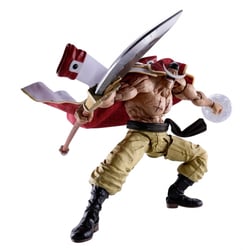
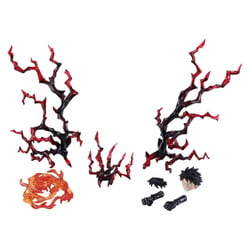
The remaining accessories vary considerably depending on the licence: weapons, energy effects, attacks, alternate hair parts, crossed arms, costume elements and other character-specific items may be included.
Sculpting and paintwork: anime and realistic characters are treated differently
For an anime character, Bandai primarily aims to transform a two-dimensional design into a three-dimensional object while retaining proportions and expressions close to the original work.
For characters portrayed by real actors, the challenge is different. Tamashii Nations notably uses its Tamashii Digital Coloring Technology, which allows facial details and subtle colour variations to be applied with great precision.
This technology has been used for real-life personalities such as Bruce Lee and continues to be employed on contemporary releases to reproduce facial details, skin tones and portrait shading.
Digital printing should therefore not be regarded as a standard feature of every S.H.Figuarts figure: it is mainly used when the character and the desired visual result justify it.
What is S.H.Figuarts Shinkocchou Seihou?
Shinkocchou Seihou is a specific design method developed within S.H.Figuarts. Bandai introduced it around 2013-2014 with Kamen Rider Kabuto.
Rather than building the sculpt primarily from its outer surface, the principle is to begin with the skeletal structure of the character and progressively build the volumes around it. The aim is to combine more natural proportions with improved mobility. Development combines traditional sculpting, 3D scanning, digital design and 3D printing.
This technology is mainly used for certain tokusatsu licences such as Kamen Rider, Ultraman and Garo. It should therefore not be considered a new generation applied to all S.H.Figuarts, but rather a specific branch within the range.
Which licences are available as S.H.Figuarts?
The S.H.Figuarts catalogue has become extremely broad since 2008.
Its origins remain closely connected to Japanese live-action productions, including Kamen Rider, Super Sentai, Ultraman and Metal Heroes.
The range subsequently became particularly important in manga and Japanese animation. Licences represented over the years include Dragon Ball, One Piece, Naruto, Jujutsu Kaisen, Demon Slayer, My Hero Academia, Berserk, Bleach, Hunter × Hunter, Sailor Moon, JoJo's Bizarre Adventure and many other series.
Bandai also develops characters from video games and Western licences. Star Wars, Marvel and DC have notably inspired numerous S.H.Figuarts releases.
This diversity is one of the distinctive features of S.H.Figuarts: collectors can use a relatively consistent format to bring together characters from licences that originally have no connection with one another.
Dragon Ball and the continuous evolution of S.H.Figuarts
Dragon Ball provides a very good example of how S.H.Figuarts continues to evolve.
A character already produced several years earlier may receive a completely new sculpt, new proportions and a more recent articulation system. A new version is therefore not necessarily a simple reissue of an older model.
Reissues, new versions and limited editions
A reissue generally brings an existing reference back into circulation without representing a new generation of the character.
By contrast, when a model receives a new sculpt, new proportions or new articulation, it represents a new interpretation even if the character and costume are identical or very similar.
Bandai also occasionally releases colour variants, anniversary editions, event exclusives and BEST SELECTION products. These are previously released S.H.Figuarts that Bandai Tamashii Nations offers again in a more accessible version, with a more limited selection of accessories and new packaging. They are therefore not new sculpts or new generations of the figure, but rather popular models offered in a simpler configuration.
How much does an S.H.Figuarts cost?
There is no standard price.
S.H.Figuarts therefore occupies an intermediate position in the collectible figure market: more elaborate and generally more expensive than a mass-market action figure, but considerably more accessible in both size and price than a large 1/6 scale articulated figure or resin statue. Some releases cost around €30 to €50, many fall between €50 and €80, while larger or more complex models can exceed €150.
How can you identify an official S.H.Figuarts?
Counterfeits exist for some particularly popular licences.
Tamashii Nations uses a TAMASHII NATIONS QUALITY seal on its recent products. This seal incorporates anti-counterfeiting elements and its appearance has gradually evolved. Bandai specifies that some older references or certain products may be exceptions, so the absence of a modern seal obviously does not mean that an older figure is counterfeit.
Buying from an official retailer such as Myth Factory therefore remains the simplest way to avoid counterfeit products.
Why does S.H.Figuarts remain an important range for collectors?
The main strength of S.H.Figuarts lies in its balance between relatively compact size, articulation, faithfulness to the character and display possibilities.
Since 2008, the range has never remained technically static. Articulation systems, proportions, digital sculpting, facial printing, the use of fabric and accessory design have continually evolved. Comparing the earliest Kamen Rider figures from 2008 with current releases clearly illustrates this technical progression.
Above all, the range makes it possible to build relatively extensive collections without requiring the space needed for statues or 1/6 scale figures, while still allowing collectors to mix their favourite licences and create their own poses and displays.