

Chogokin figures by Bandai Tamashii Nations
Discover our selection of Chogokin figures by Bandai Tamashii Nations, a historic family of collectible robots and mechas launched in 1974 with Mazinger Z. Combining die-cast metal, plastic materials and mechanical engineering, the Chogokin, Soul of Chogokin and DX Chogokin ranges reproduce the transformations, combinations and signature features of many licences such as Goldorak, Mazinger Z, Macross, Voltes V and many more.
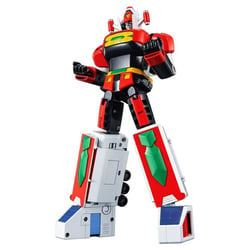

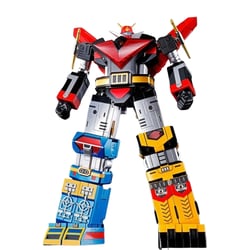
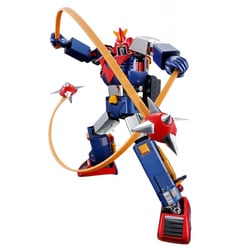
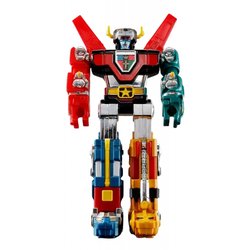
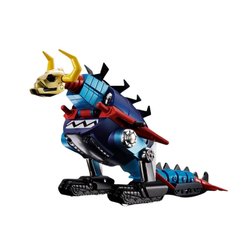
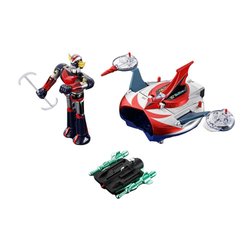
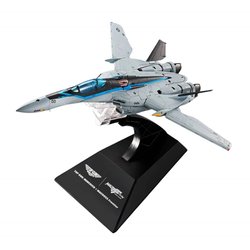
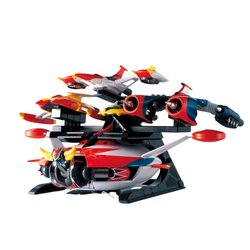
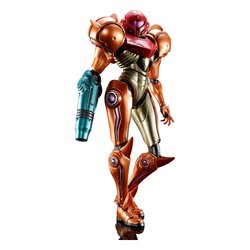
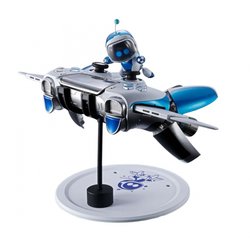
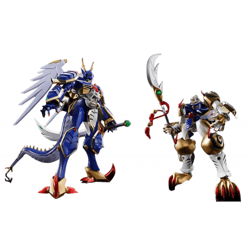

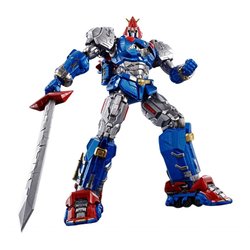
Chogokin: a story that began with Mazinger Z in 1974
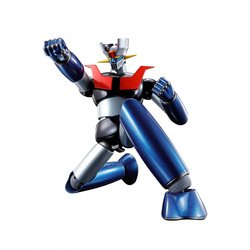
The history of Chogokin began in Japan in 1974 with the release of a Mazinger Z toy by Popy, a company that was then part of the Bandai group. The success of this metal robot quickly helped turn Chogokin into one of the most iconic names in Japanese toys.
The Japanese term Chōgōkin roughly translates as “super alloy” and directly refers to the fictional metal from which Mazinger Z is made in its universe. To bring this idea to life as a toy, Popy used die-cast metal to give the robot a weight and mechanical feel that were unusual at the time.
The concept quickly proved successful and was extended to many other robots and characters. Fifty years later, Bandai Tamashii Nations continues to develop Chogokin around the same principle: combining metal, mechanical engineering and functions specific to the character being reproduced.
What is a Chogokin figure?
A Chogokin is a collectible figure or toy whose construction incorporates die-cast metal, generally combined with various plastics.
The metal primarily provides weight, rigidity and a mechanical feel when handled. However, it is only one part of the concept. Transformations, combinations, articulation, launching mechanisms, weapons and other functions characteristic of the robot also play an important role.
Depending on the licence, a Chogokin may therefore be a relatively simple articulated robot, a machine made up of several vehicles, a fully transformable mecha or a model featuring light and sound functions.
The range therefore aims not only to reproduce the character’s appearance, but also to recreate the way it works.
What materials are used for Chogokin figures?
Chogokin figures are not made entirely of metal.
Modern models generally combine zinc-based die-cast metal with ABS and, depending on the release, PVC, POM, PE or other plastics.
Metal is mainly used where its weight or rigidity provides a genuine advantage: internal structures, legs, torsos, joints or certain mechanical parts. Plastics, on the other hand, reduce the weight of moving components, make more complex shapes possible and prevent excessive stress on the mechanisms.
This combination is particularly important for transformable or combining robots. An entirely metal construction would often be too heavy to maintain good mobility and could place excessive strain on some of the joints.
A Chogokin should therefore not be judged solely by the amount of metal it contains. The way that metal is incorporated into the structure is just as important.
Do Chogokin figures share a common scale?
No. Chogokin is not a fixed-scale range.
The size depends on the character, its proportions and, above all, the functions Bandai wants to reproduce.
Some models are around fifteen centimetres tall, while large combining Soul of Chogokin releases can easily exceed 20 or 30 cm. DX Chogokin models can be significantly larger still.
Some releases explicitly state a scale, particularly within the Macross universe, but there is no scale shared by the range as a whole.
Transformations and combinations: at the heart of the Chogokin concept
Mechanical features have been part of Chogokin’s identity since the 1970s.
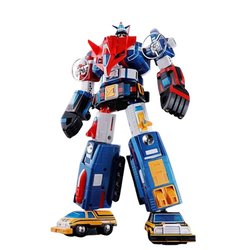
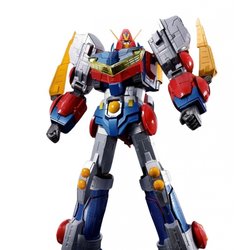
When a robot transforms or combines in the original work, Bandai generally tries to reproduce that function in toy form. Grendizer can therefore dock with its Spazer, Voltes V is made up of several vehicles that combine to form the robot, while the Valkyries from Macross can switch between different configurations.
Depending on the technical constraints, some transformations are achieved directly using the model’s various parts. Others rely on interchangeable components in order to preserve more accurate proportions or a more faithful appearance.
Handling these mechanisms is therefore an integral part of the Chogokin experience: these products are not designed simply to remain motionless in a display cabinet.
What is the difference between Chogokin and Soul of Chogokin?
Chogokin is the historic name of the family that began in 1974.
Bandai still uses it today for a wide variety of products whenever the combination of metal and mechanical functions fits the philosophy of the brand. The modern catalogue is no longer limited to classic super robots and can also include characters and machines from video games and other areas of pop culture.
Soul of Chogokin, or Chogokin no Tamashii, is a branch specifically designed for adult collectors. Launched in 1997, it captures the spirit of the original Chogokin toys while benefiting from modern sculpting, articulation and engineering techniques.
Soul of Chogokin is now one of the best-known ranges within the Chogokin family.
Soul of Chogokin: the return of the great robots in 1997
The first Soul of Chogokin release was the GX-01 Mazinger Z, launched in 1997.
The aim was to revisit the robots that had marked the childhood of the first generations of collectors while offering a much more sophisticated product than the toys of the 1970s.
Over the years, Soul of Chogokin has featured numerous robots from Japanese animation, including Mazinger Z, Great Mazinger, Grendizer, Getter Robo, Gaiking, Combattler V, Voltes V, Godmars and many others.
Each character presents its own challenges. Bandai sometimes has to develop an entirely different internal architecture to reproduce a combination of several vehicles, a transformation or a particular feature.
This lack of a standardised construction largely explains the significant differences in size, complexity and price between different Soul of Chogokin releases.
What does “GX” mean on Soul of Chogokin figures?
The main Soul of Chogokin releases use a reference system beginning with the letters GX, followed by a number.
The first model was therefore the GX-01 Mazinger Z, and the numbering has continued as the collection has expanded.
Additional letters or suffixes may be added to the reference to identify a new version, a complementary set or a particular edition.
However, there is no universal code that can be applied to all these suffixes: their meaning generally depends on the specific product.
What is Soul of Chogokin D.C.?
D.C. stands for Dynamic Classics.
This series has notably allowed Bandai to revisit several characters from works by Go Nagai and Dynamic Planning, with a stronger emphasis on the proportions and appearance seen in the classic animation.
Mazinger Z, Great Mazinger, Getter 1 and Grendizer are among the characters released in this style.
D.C. models are therefore not simply colour variations. They use sculpts and proportions specifically designed to offer a different interpretation of the robot, generally closer to its on-screen appearance.
What is Kakumei Shinka?
Kakumei Shinka can be translated around the idea of “revolution” and “evolution”.
Bandai uses this name for certain new generations of Soul of Chogokin figures featuring a completely redesigned construction intended to improve both articulation and mechanical functions.
The Mazinger Z GX-105 is a representative example: its structure was developed to allow more natural poses while retaining characteristic features such as the Rocket Punches.
A Kakumei Shinka release should therefore be regarded as a new technical generation of the character, rather than simply a reissue of an older model.
What is DX Chogokin?
DX Chogokin takes the mechanical aspect of the Chogokin family even further.
These models often use larger dimensions to accommodate particularly complex transformations, combinations or mechanisms. Some releases also include light and sound functions.
Macross is now one of the licences most closely associated with DX Chogokin. Its Valkyries reproduce their different Fighter, GERWALK and Battroid configurations while incorporating metal parts into their structures and joints.
Over successive generations, Bandai has regularly reworked their mechanisms to improve proportions, mobility and the accuracy of their transformations.
There is also DX Soul of Chogokin, a separate line that applies this very large-scale philosophy to certain iconic Soul of Chogokin robots. These models can include internal structures, lighting, sound effects, dialogue or music.
DX Chogokin and DX Soul of Chogokin should therefore not be considered one and the same range.
Why are vintage Popy Chogokin toys being reissued?
The fiftieth anniversary of Chogokin also led to a very different approach: deliberately recreating certain historic toys.
Bandai has notably reproduced Popy products from the 1970s while retaining their original silhouettes, proportions and mechanisms.
The modern Chogokin Deluxe Grendizer & UFO Spazer directly recreates the concept of the historic toy, including its deliberately retro appearance. The aim is not to offer a new, realistic interpretation of Grendizer, but to give collectors the opportunity to rediscover the experience of the original toy in the form of a brand-new product.
These products form part of a Resurrection Series approach that also extends to other major historic families of Japanese toys.
Which licences can be found in the Chogokin ranges?
Classic Japanese robots naturally occupy a central place.
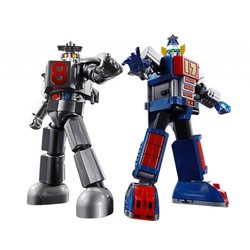
Mazinger Z, Great Mazinger, Grendizer, Getter Robo, Gaiking, Combattler V, Voltes V, Dairugger XV and Godmars are among the many series represented throughout the history of Soul of Chogokin.
Super Sentai robots have also joined the collection, while Macross is one of the main pillars of DX Chogokin.
However, the CHOGOKIN brand has gradually expanded into a much wider variety of universes. Machines and characters from video games and pop culture can now join the range whenever their designs lend themselves to the use of metal and distinctive mechanical features.
Chogokin is therefore no longer simply synonymous with “1970s Japanese robots”.
Is Metal Build part of Chogokin?
Metal Build belongs to the same technical lineage, but is now an independent range.
Bandai presents Chogokin as the origin of a family of collections that incorporate metal into their construction, which also includes Metal Build, Gundam Fix Figuration Metal Composite and Metal Structure Kaitai-Shou-Ki.
Metal Build retains the idea of a structure incorporating metal, but combines it with a different artistic and technical approach, particularly through the reinterpretation of mecha designs.
Chogokin and Metal Build should therefore be regarded as two separate ranges, even though they share part of the same technical heritage.